Are Your Moles under Control?

madwire • April 17, 2015

Share this article

If you have ever walked across your lawn and thought you were walking on a sponge or looked across your manicured outdoor living space and thought a group of miniature miners were building tunnels looking for gold, then you might have moles.

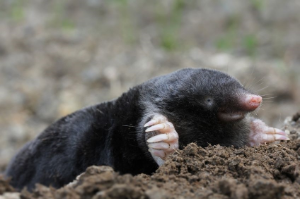
Moles are small mammals that feed primarily on insects (grubs, earthworms, etc.). They are small (4-8” on average), have a long snout, web-like clawed feet perfect for digging, and are grayish in color with velvety fur.

Moles can be a homeowner’s nemesis. Not only are their tunnels unsightly, they can also damage the turf you are working so hard to perfect. Moles are surprisingly resilient and difficult to control. By understanding more about a mole’s lifestyle, there may be hope for your lawn.

Environment : Moles live underground (I know, shocker) . During the wet spring and fall they come to the surface to forage thus causing those pesky problems. Although you may not see them during winter, they are still there. Moles travel deep in the ground when the weather doesn’t suit them.

Reproduction : Moles reproduce once a year, usually mid April through early May. They have 2-3 babies that are fully grown within two months.

Eating Habits:  Moles are insectivores. Contrary to popular opinion, a mole’s primary food source is earthworms, not grubs. J. Roberts of the UNH extension office says that moles can eat 60-80% of their body weight each day. That comes out to 40 pounds of food each year (per mole!).

Control:  Using the term mole control may be an overstatement. You may be able to limit their damage, but true control is setting the bar too high. If you ask ten homeowners how to control moles you will probably get ten different answers. Here are some of the more popular ones:

  1. Castor Oil:  thought to coat the insect and cause “digestive discomfort” to the moles, it only encourages moles to move to a clean area thus prolonging your mole issues.
  2. Insecticides:  commonly used to kill grubs present in the lawn, insecticides only remove one of (and not the main) the mole’s food sources. Grubs in and of themselves can damage your turf, so it is still a good idea to treat for them… just don’t expect it to solve your mole problem.
  3. Poison Peanuts:  If you go to your neighborhood lawn and garden store and ask for a mole solution you are likely to get a bottle of poison peanuts. These “peanuts” resemble rabbit food and are made from a compressed blend of hay, nuts and seeds. Though these may be effective on rodents (like mice or gophers) they are not effective on moles who only eat insects.
  4. Home Remedies:  there are a myriad of “sure fire” home remedies you can find online. These range from putting human hair to razor blades in the mole tunnels. Bubblegum, vibration devices, pickle juice, moth balls, and so many other are at the least ineffective and can even be a hazard to you and your family.
  5. Trapping:  one permanent solution is trapping. You can pick up several different types of traps from our neighborhood lawn and garden center. They key to success is following the instructions to the letter. Just to be clear, “trapping” does not mean a catch-and-release program, they quickly and efficiently kill the moles thus creating a permanent solution. Trapping takes some time and patience, but in the end it can be an effective way to eliminate the moles.
  6. Baits:  These look like worms or grubs.  Considering the fact that worms are the main part of a mole’s diet, poison worms would be a logical control method. These worms resemble earthworms and, when placed properly in the mole tunnels, provide surprisingly effective results. Again, following the directions exactly ensures good results. One additional step Cullen suggests is wearing gloves when handling the worms. This will keep your scent off the worms so it doesn’t alert the moles that something “fishy” is up.
  7. NC State University recommends an alternative solution:  “Before initiating a control program for moles, be sure that they are truly out of place. Moles play an important role in the management of soil and of grubs that destroy lawns. Tunneling through the soil and shifting of soil particles permits better aeration of the soil and subsoil, carrying humus further down and bringing the subsoil nearer the surface where the elements of plant food may be made available.”

So… an integrated action plan can manage your moles and mole symptoms, but there is no permanent solution.


Sources:

Keith L. Smith, Associate Vise President for Ag. Admin. and Director, OSU Extension “Effective Mole Control” W-11-2002

Kevin Frank, Michigan State University Extension, Department of Crop and Soil Sciences. “What works and doesn’t to deter moles from tunneling in turf” April 15, 2011

John M. Roberts, UNH Extension Turf Specialist, and Virginia Hast, Program associate, Agriculture Resources. “Moles in Home Lawns” February 2001

Recent Posts

April 3, 2026
Spring in Memphis brings warmer temperatures, longer days, and much-needed rain—but it also signals the start of weed season. As lawns begin to wake up from winter dormancy, weeds are already active below the surface, ready to take advantage of changing conditions. Early prevention and control are key to keeping your yard healthy, thick, and weed-free throughout the growing season. Why Spring Weed Control Matters in Memphis Memphis lawns face a unique combination of mild winters, early warm spells, and spring rainfall. These conditions create the perfect environment for weeds like crabgrass, henbit, chickweed, and clover to thrive. Many of these weeds germinate before homeowners even notice them, competing with grass for nutrients, sunlight, and water. Once weeds become established, they’re much harder—and more expensive—to eliminate later in the season. That’s why spring is the most critical time to focus on proactive weed management. The Role of Pre-Emergent Weed Control One of the most effective tools for spring weed prevention is pre-emergent weed control . Pre-emergents work by stopping weed seeds from germinating in the first place, creating a protective barrier in the soil before weeds ever break the surface. Timing is everything. In Memphis, pre-emergent applications are most effective as soil temperatures begin to rise consistently—often late winter to early spring. Applying too late allows weeds to take hold, while applying too early can reduce effectiveness. Early Post-Emergent Treatments: Stopping Weeds in Their Tracks  Even with pre-emergent treatments, some weeds may still appear due to weather fluctuations or existing seed pressure. That’s where early post-emergent weed control comes in. Targeting young, actively growing weeds in early spring prevents them from spreading and producing seeds that can cause problems later in the year. Professional treatments ensure weeds are addressed without harming your turf, especially important for common Memphis grasses like Bermuda and fescue. Healthy Lawns Naturally Resist Weeds A thick, well-maintained lawn is one of the best defenses against weeds. Proper fertilization, mowing at the correct height, and consistent lawn care practices help grass grow dense enough to crowd out unwanted growth. Spring lawn care sets the foundation for strong root development and long-term weed resistance. Why Professional Weed Control Makes a Difference Spring weed control requires precise timing, product selection, and local expertise. At Personal Lawn Care , we understand Memphis lawns and the seasonal challenges they face. Our tailored weed control programs focus on prevention first, early intervention second, and long-term lawn health always. By starting weed control early in the spring, you’re protecting your lawn for the entire growing season—and saving yourself frustration down the road. Get Ahead of Weeds This Spring If you want a greener, healthier lawn without the constant battle against weeds, now is the time to act. Contact Personal Lawn Care today to learn more about our spring weed prevention and early control services designed specifically for Memphis yards.
Yellow lightbulb illuminated, representing an idea or solution.
By czarina October 27, 2025
As the vibrant greens of summer give way to the golden tones of fall, your lawn in Memphis begins its quiet transition into dormancy. But don’t be fooled—autumn isn’t the time to neglect your grass. In fact, fall is one of the most important seasons to care for your lawn if you want it to… The post Fall Lawn Care in Memphis: Best Practices for a Healthy, Beautiful Yard appeared first on Personal Lawn Care, Inc..

Lush, bright green lawn filling the frame.
By Kimberly Smith May 28, 2025
If you’re living in Memphis and dreaming of a lush, green lawn that survives the Southern heat and thrives throughout the seasons, the good news is—you’re in the right climate for some fantastic grass options. But not all grass types are created equal. With Memphis’ hot, humid summers and typically mild winters, choosing the right… The post Best Lawn Grass Types for Memphis and Year-Round Care Tips appeared first on Personal Lawn Care, Inc..
By Kimberly Smith February 10, 2025
Spring might feel far away, but it’s never too early to dream of a lush, green lawn. By tackling a few simple tasks now, you’ll set the stage for a thriving yard that’s the envy of the neighborhood. Here are some practical tips to get you started: 1. Start with Scalping  Start with Scalping (Warm… The post Lawn Care Tips to Prepare for Spring appeared first on Personal Lawn Care, Inc..
By Kimberly Smith July 17, 2023
Many people in the Memphis area will have freeze damage to their landscaping over the winter. When that happens, it raises many questions. We found a great video about rejuvenation pruning and how it’s saving landscapes in the Memphis area after a brutal winter freeze! Dale Skaggs, the director of horticulture at the Dixon Gallery… The post Rejuvenation Pruning After Freeze Damage appeared first on Personal Lawn Care, Inc..
By madwire July 8, 2021
You may not be too concerned about how you’re mowing your lawn — all that really matters is that it looks lush and lively. After all, is there a wrong way to mow? According to most lawn care professionals, there absolutely is a right and wrong way to go about mowing your lawn. Proper lawn… The post 7 Tips for a Lush Lawn appeared first on Personal Lawn Care, Inc..
By madwire May 26, 2021
Weed control services are essential for proper lawn maintenance. You spend too much time and money keeping your yard well-groomed to have it ruined by pesky weeds. We know all too well that that’s easier said than done. Weed removal is an ongoing process during the spring and summer months. At Personal Lawn Care, we… The post The Problems Weeds Pose to Your Lawn appeared first on Personal Lawn Care, Inc..
By madwire May 26, 2021
Did you remember to get a flu shot… for your lawn? Protect Zoysia now or resod later. Thick Zoysia turf can be an envy of the neighborhood. This versatile durable grass grows well from full sun to partial shade. It’s durable, but not indestructible. During the spring & fall Zoysia can quickly come under attack-seemingly… The post Flu Shot for Your Lawn appeared first on Personal Lawn Care, Inc..
Lawn fertilizer services in Memphis, with fresh grass growing in soil, and a button
By madwire March 10, 2021
If you haven’t read part one of this series, be sure to catch up on our first three lawn care tips to prepare your yard for spring. If you live in Memphis and the surrounding areas, don’t let the warm days and backyard parties sneak up on you — get in touch with Personal Lawn… The post Six Lawn Care Tips To Prepare for Spring – Part Two appeared first on Personal Lawn Care, Inc..
Lush green grass with text overlay
By madwire February 26, 2021
They say: “spring is in the air…”  Well, almost. As we round out the month of February, most of us are looking forward to putting the cold, winter days behind us. While it’s not quite time to plant a garden or pull out the picnic basket, it’s high-time you start preparing your lawn for the… The post Six Lawn Care Tips To Prepare for Spring – Part One appeared first on Personal Lawn Care, Inc..
Show More